What Happens When Your Chicago Motorcycle Accident Involves a Hit and Run?
When you’re the victim of a hit-and-run motorcycle crash in Chicago, you face not only injuries and bike damage, but also mounting questions about medical bills, insurance claims, and legal options. Understanding your rights under Illinois law can make the difference between recovering full compensation or shouldering the burden alone.
If you’ve been injured in a hit-and-run motorcycle accident in Chicago, Atlas Injury Law can help you navigate the complex legal process and fight for the compensation you deserve. Call (630) 381-7083 or contact us now to discuss your case with an experienced attorney who understands motorcycle hit-and-run cases.
The Immediate Aftermath of a Chicago Motorcycle Hit and Run
When a driver strikes your motorcycle and flees, they’re committing a serious criminal offense under Illinois law. For motorcyclists, who face nearly 22 times the fatality rate of passenger car occupants, delays in medical attention can have devastating consequences.
Your first priority should always be safety and medical care. Even if you feel uninjured, adrenaline can mask serious injuries. Call 911 immediately to report the accident and request medical assistance. The responding Chicago Police Department officers will create an official crash report (E-Crash), which becomes crucial evidence for your case.
💡 Pro Tip: Always request the crash report number from the responding officer. Chicago Police Department crash records can be amended as investigations progress, and this number allows you to track updates that might help identify the fleeing driver.
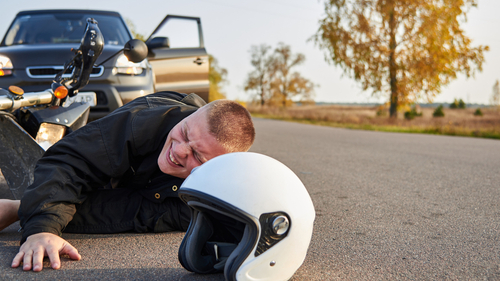
Understanding Illinois Hit and Run Laws for Motorcycle Accidents
Illinois treats hit-and-run accidents as criminal offenses with severe penalties. When a driver causes a crash and leaves without exchanging information or rendering aid, they face potential felony charges, especially if the accident resulted in injuries or death.
The criminal prosecution of the hit-and-run driver, if caught, proceeds independently of your civil lawsuit. While criminal charges can result in jail time, fines, and license revocation, they don’t directly compensate you for injuries, lost wages, or motorcycle damage. Pursuing a civil claim is essential for financial recovery.
Criminal vs. Civil Proceedings
The State of Illinois prosecutes criminal charges to punish hit-and-run drivers and protect public safety. Your civil claim focuses on recovering compensation for your specific damages. These processes can occur simultaneously, and evidence from the criminal case often strengthens your civil claim.
Why Hit and Run Motorcycle Accidents Are More Dangerous
Statistics show 66 percent of motorcycle fatalities occur in urban areas nationwide. Chicago’s dense traffic patterns create heightened risks for motorcyclists. When a driver flees after causing a crash, the danger multiplies.
Hit-and-run collisions worsen medical outcomes due to delays in medical attention. Without the at-fault driver present to call for help, injured riders may suffer from:
- Uncontrolled bleeding
- Worsening head or spinal injuries
- Exposure to traffic and secondary accidents
- Delayed treatment for internal injuries
- Shock and hypothermia
Fatal motorcycle crash injuries resulted in over $65 billion in lifetime costs nationally in 2022. Non-fatal injuries can lead to extensive rehabilitation, lost wages, and permanent disabilities affecting earning capacity and quality of life.
Steps to Take After a Chicago Motorcycle Hit and Run
Immediate Actions at the Scene
Your actions following a hit-and-run significantly impact your ability to recover compensation. After ensuring safety and calling 911, gather as much information as possible about the fleeing vehicle and driver.
Document everything you remember:
- Make, model, and color
- License plate numbers (even partial)
- Distinctive features like damage or stickers
- Direction of travel after the crash
- Physical description of the driver
Look for witnesses immediately and ask for contact information from anyone who saw the accident. Many Chicago intersections and businesses have security cameras that might have captured the crash or fleeing vehicle.
Medical Documentation
Seek comprehensive medical evaluation even if injuries seem minor. Motorcycle accidents often cause injuries that don’t manifest symptoms immediately, such as traumatic brain injuries, internal bleeding, or soft tissue damage. Document all medical treatment, follow-ups, and ongoing symptoms meticulously.
💡 Pro Tip: Keep a daily journal documenting pain levels, limitations in daily activities, and emotional impact. This record becomes powerful evidence when pursuing compensation for pain and suffering.
Reporting Requirements
Illinois law requires reporting crashes involving property damage of $1,500 or more or any bodily injury. For motorcycle accidents, this threshold is almost always met. The Chicago Police Department crash data system tracks these incidents, including hit-and-run cases.
Ensure the officer properly documents the hit-and-run aspect. This designation affects how your case proceeds through criminal and civil channels.
How to Find the Hit and Run Driver
Law Enforcement Investigation
Chicago Police Department takes hit-and-run cases seriously, especially those involving injuries. Detectives may canvas for surveillance footage, interview witnesses, and check body shops for matching vehicles.
Investigators use various resources:
- Traffic camera footage
- Business surveillance systems
- Paint transfer analysis
- Vehicle part identification
- Social media investigations
Private Investigation Options
While law enforcement investigates the criminal aspect, hiring a private investigator can support your civil claim. Private investigators can dedicate more time to your case, interview additional witnesses, and uncover evidence strengthening your claim.
💡 Pro Tip: Time is critical in hit-and-run investigations. Security footage is often overwritten within days or weeks, and witness memories fade quickly. The sooner you involve legal counsel and investigative resources, the better your chances of identifying the responsible driver.
Insurance Options for Hit and Run Motorcycle Victims
Uninsured Motorist Coverage
When the hit-and-run driver cannot be found, your own insurance becomes your primary compensation source. Uninsured motorist (UM) coverage, which Illinois law requires insurers to offer, covers injuries and damages caused by hit-and-run drivers.
However, insurance companies often scrutinize hit-and-run claims closely, looking for ways to minimize payouts. Having experienced legal representation ensures you present the strongest possible case.
Filing Your Claim
Notify your insurance company immediately, but be cautious about providing recorded statements without legal counsel. Insurance adjusters aim to minimize payouts through tactics like:
- Requesting unnecessary medical authorizations
- Disputing injury severity
- Questioning your accident account
- Offering quick, lowball settlements
An experienced attorney can counter these arguments and fight for full compensation.
Compensation Available in Chicago Motorcycle Hit and Run Cases
Medical Expenses
Your compensation should cover all medical costs, including emergency treatment, surgery, medication, physical therapy, and future medical needs. Documenting every expense and obtaining expert opinions about future treatment strengthens your claim.
Lost Wages and Earning Capacity
Serious motorcycle injuries often require extended recovery, causing lost income. Your claim can include past lost wages and future earning capacity if injuries prevent returning to your previous occupation.
Pain and Suffering
Beyond economic damages, you deserve compensation for physical pain and emotional trauma. The fact that someone struck you and fled adds another layer of distress to an already traumatic experience.
Property Damage
Compensation should cover motorcycle repair costs or fair market value replacement. Custom parts, accessories, and riding gear damaged in the crash should also be included.
Legal Deadlines You Can’t Miss
Statute of Limitations
Illinois generally provides two years from the accident date to file a personal injury lawsuit. However, this deadline can vary depending on specific circumstances. If the hit-and-run driver is later identified, you may need to act quickly to preserve your right to sue them directly.
Missing the statute of limitations typically means losing your right to compensation forever.
Insurance Deadlines
Your insurance policy likely contains specific deadlines for reporting accidents and filing claims. These contractual deadlines can be much shorter than the statute of limitations. Review your policy carefully and comply with all notice requirements.
The Role of a Motorcycle Accident Attorney in Chicago
Why Legal Representation Matters
Navigating a hit-and-run motorcycle accident claim involves complex interactions between criminal law, insurance regulations, and civil litigation. An attorney experienced in motorcycle accidents understands unique challenges riders face and can effectively counter insurance company tactics.
Legal representation becomes critical in hit-and-run cases because of additional investigative needs and insurance coverage issues. Your attorney can coordinate with law enforcement, hire investigators, and negotiate with insurers while you focus on recovery.
Building Your Case
A comprehensive approach includes gathering evidence from multiple sources. Your attorney will obtain the official CPD crash report, preserve physical evidence, obtain surveillance footage, and document your injuries thoroughly.
💡 Pro Tip: Choose an attorney who regularly handles motorcycle accidents specifically. These cases involve unique dynamics, injury patterns, and bias issues requiring specific knowledge and experience.
Frequently Asked Questions
What should I do if I didn’t get any information about the vehicle that hit me?
Even without vehicle information, you can pursue compensation through uninsured motorist coverage. Focus on documenting injuries, gathering witness statements, and checking for surveillance cameras. Report the accident to police immediately. Your insurance claim doesn’t require identifying the specific driver, but you must prove a hit-and-run occurred.
Can I still recover compensation if the hit-and-run driver is never found?
Yes, through your uninsured motorist coverage if you carry it. Illinois insurers must offer this coverage, though you can reject it in writing. UM coverage treats the hit-and-run driver as an uninsured motorist, allowing you to claim medical expenses, lost wages, pain and suffering, and other damages.
Will my insurance rates increase if I file a hit-and-run claim?
Illinois law does not prohibit insurers from raising rates after you were a hit-and-run victim where you were not at fault. While rates may not increase in all cases, insurance companies can raise premiums even when you are not at fault, and some insurers automatically raise rates after any accident is reported to them. Document everything thoroughly to prove you weren’t at fault.
Moving Forward After a Chicago Motorcycle Hit and Run
Surviving a hit-and-run motorcycle accident leaves you facing physical, emotional, and financial challenges. While the criminal who fled may escape immediate accountability, Illinois law provides pathways to recover compensation. Understanding your rights, acting quickly to preserve evidence, and securing experienced legal representation can make the difference between struggling alone and obtaining resources needed for recovery.
Atlas Injury Law has the experience and dedication to fight for motorcycle accident victims throughout Chicago. Don’t let a hit-and-run driver’s actions leave you bearing the financial burden. Call (630) 381-7083 today or contact us now to schedule a consultation and learn how we can help you pursue the justice and compensation you deserve.